
Oakland County City Directory Holdings
The best Oakland County starting point is the Oakland County Historical Society shelf list, because it identifies actual volumes rather than implying a continuous run. Its Pontiac material begins with the Pontiac-Flint directory for 1860-61 and includes a Pontiac and Oakland County volume for 1886. Later Pontiac books include selected issues from 1895 through 1915, Polk editions from the 1920s, an Arrow street guide, and a 1931 telephone book. The record is useful precisely because it shows gaps. A missing year in the catalog should be treated as a missing local holding until another catalog or repository proves otherwise.
| Oakland collection | Located years | Keeper | How it helps |
|---|---|---|---|
| Pontiac-Flint and Pontiac/Oakland books | 1860-61; 1886 | Oakland County OCHS research library | Early named residents and addresses |
| Pontiac directory sequence | 1895, 1898, 1902, 1904, 1907, 1912, 1915 | OCHS shelf list | Household and occupation clues |
| Polk, Arrow, and telephone volumes | 1922, 1925, 1928, 1930, 1931 | OCHS shelf list | Names, streets, and a bridge between issues |
| North and South reverse books | 1958, 1960; 1967-68 | OCHS shelf list | Address-to-occupant searching where coverage fits |
Oakland County has 62 cities, villages, and townships. A Pontiac volume is not evidence for a Royal Oak or Lake Orion address within Oakland County, and a county officer directory is a different kind of publication. Match the book’s stated geography to the street before relying on an entry.
Note: Record the catalog object, edition year, and community before comparing a directory entry with another Oakland County source.
Pontiac’s Oakland County Directory Runs
Pontiac has Oakland County’s deepest identified directory sequence. For Oakland County research, the OCHS list separates the early 1860-61 Pontiac-Flint volume from the 1886 Pontiac and Oakland County directory, then catalogues selected Pontiac issues through 1915. Polk’s Pontiac books follow in 1922, 1925, and 1928. The 1930 Greater Pontiac Polk’s Official Arrow Street Guide changes the access point from surname to street, while the 1931 telephone directory can help bridge a year without a standard city book.
The Oakland History Center maintains a research library at 405 Cesar E. Chavez Avenue in Pontiac. Its published hours are typically Tuesday through Thursday, 11 a.m. to 4 p.m., and Oakland County visitors are asked to call first at 248-338-6732. The center offers research assistance and digitization support, which matters when a volume is on a shelf rather than in a searchable database.
The Oakland County Historical Society research library is a local route into these historical volumes.
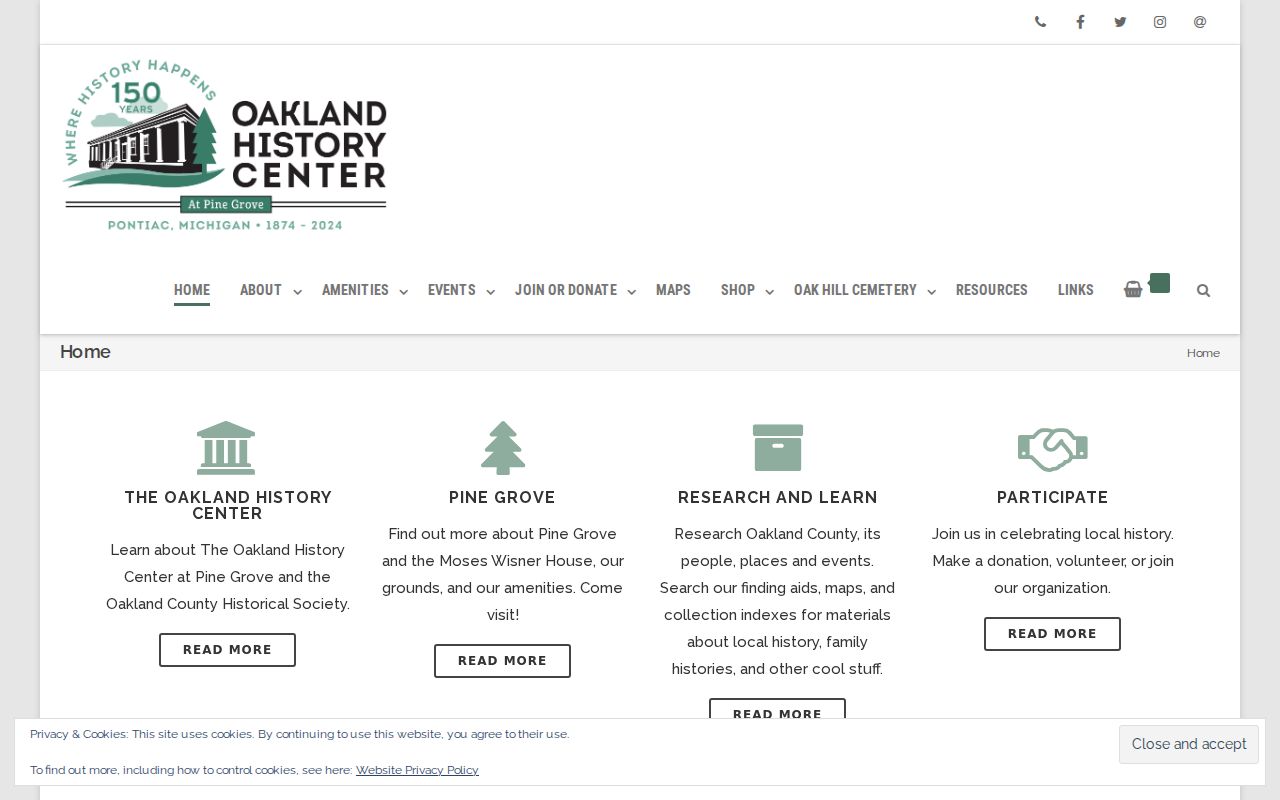
Call ahead with the Oakland County directory year and place name so staff can direct the request to the right shelf, microfilm, or related local-history source.
North and South Oakland County Directories
Suburban Oakland County coverage is more episodic. OCHS lists a 1924 Polk directory for Royal Oak, Berkley, Clawson, Ferndale, and Pleasant Ridge; Birmingham appears in 1937; Royal Oak and Ferndale editions appear for 1938 and 1945; and Royal Oak has 1956 and 1960 entries. For an address search, the North Oakland County Criss-Cross editions from 1958 and 1960 and Bresser’s Cross-Index for South Oakland County from 1967-68 are especially important. They reverse the usual surname-first route.
Bresser can present a street, house number, occupant or business, phone, owner or renter notation, and sometimes a first-listed, new-arrival, or relocation clue. Its Oakland County geography and date still control the result. It should not be stretched to an Oakland County community or year outside the edition’s coverage.
The OCHS directory shelf list identifies the specific local books behind this Oakland County research.
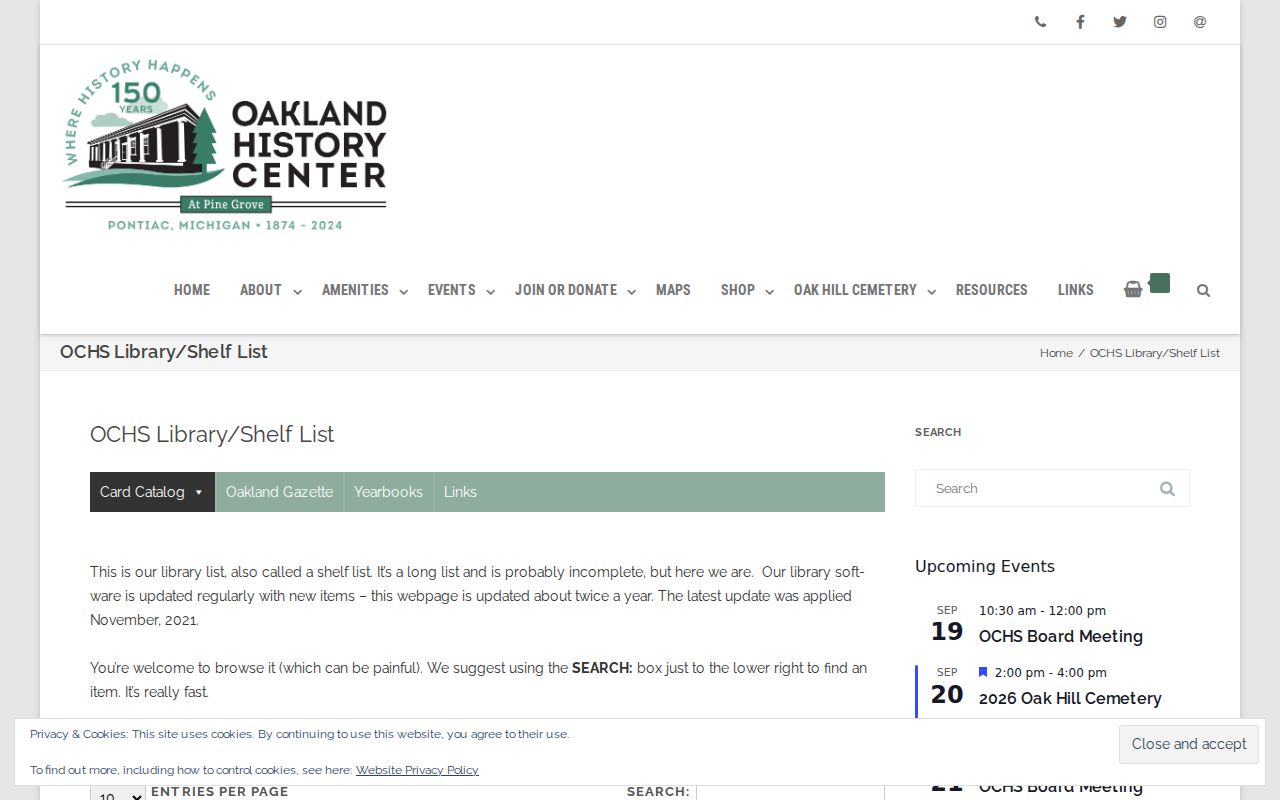
Use the Oakland County catalog details to decide whether a surname index, a street-order guide, or a telephone volume is the best next record.
Reading an Oakland County City Directory
The Library of Michigan directory guide explains the common formats. Polk surname entries can include occupation, other household members, ownership status, and an address. Street pages run alphabetically by street and numerically by house number. Phone pages run numerically but generally name only the household head. These are dated publisher snapshots, not proof that every person in a household lived there all year.
| Name line | Look for surname, given name, initials, and possible household placement. |
|---|---|
| Address | Capture the street and number exactly, then compare it with the street-order section. |
| Occupation | Polk commonly supplies an occupation; the exact employer notation was not confirmed in an inspected Oakland page. |
| Tenure mark | Polk or Bresser may distinguish owner from renter, a dated publisher notation rather than title proof. |
| Telephone or business clue | A numerical phone listing or classified entry can narrow a search but may identify only one adult. |
- Criss-cross directory
- A reverse directory arranged by street and number, useful when the address is known first.
- Householder index
- A name-oriented listing that normally centers on the primary listed adult, not every resident.
- Abbreviation key
- The publisher’s guide to shortened words and symbols. Photograph or note it before interpreting a mark.
Before attaching a name to an Oakland County address, compare the entry’s year, community, and format. A line can identify a listed adult, a business, or a telephone subscriber without describing every person at that location.
Oakland County Directory Research Rooms
When the OCHS catalog does not cover the needed place or year, the Library of Michigan Oakland County guide points to county histories, the 1845 state census, naturalization records, probate abstracts, marriage material, maps, plats, and the Birmingham Eccentric obituary index. The library holds microfilm and can lend reels to Michigan libraries through interlibrary loan. That is a documented fallback for Oakland County research when a directory is not on a local shelf.
Pontiac Public Library supplies another Oakland County path. Its microfilm collection spans 1835-2019, and staff can search a specified narrow date window for $3. Its resources include Pontiac History, library-access genealogy tools, Oakland Press digital searching from 2004 forward, and Michigan Digital Sanborn Maps. Newspaper title changes matter, so an Oakland County surname search may need the Pontiac Press predecessors or another community paper rather than one countywide title.
The Library of Michigan Oakland guide brings together the wider collection routes for a historical directory question.
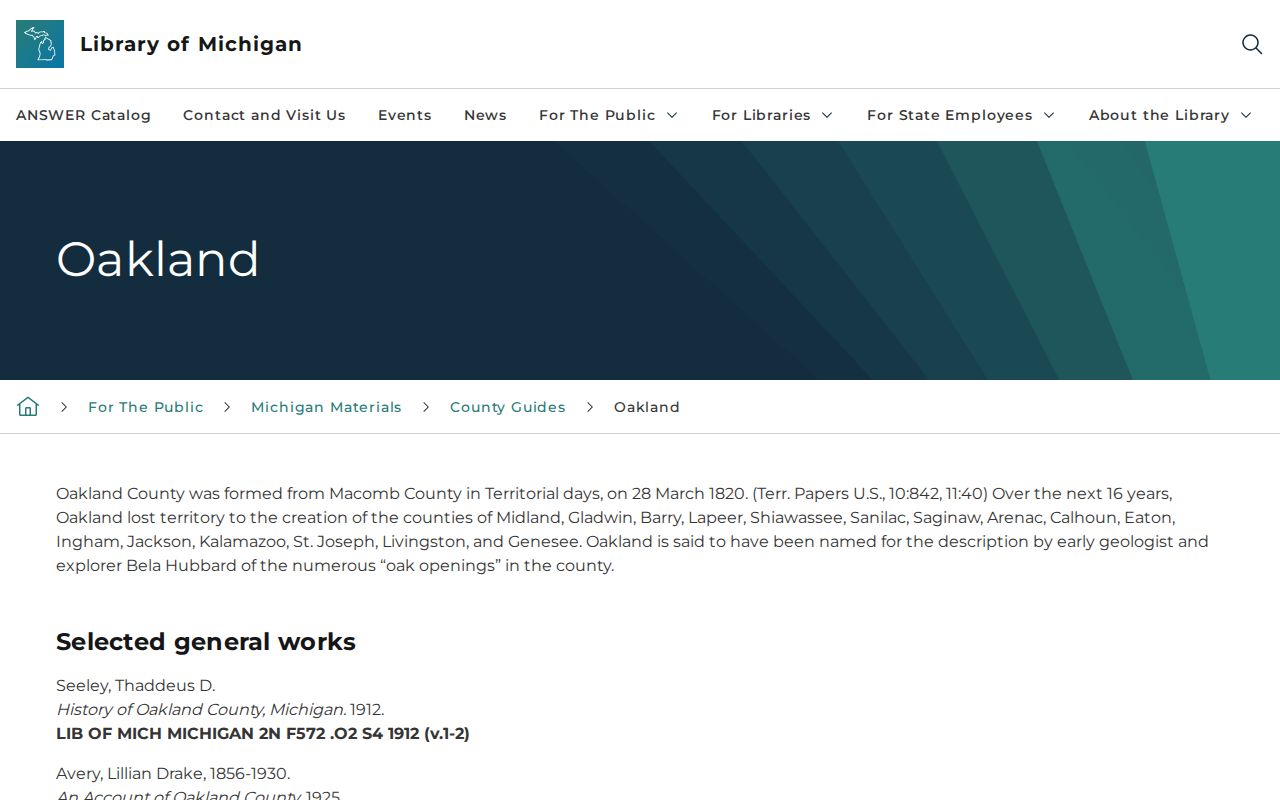
The guide is most useful for finding the next Oakland County custodian after a local directory gap, not for assuming that each referenced item is online.
Oakland County City Directory Formats
Format changes alter the question an Oakland County directory can answer. A Polk surname section works from person to address. A street guide and Bresser criss-cross book work from address to listed occupant. A telephone book may connect a number to the household head. A county officer directory instead supplies administrative context. Keep each format in a separate research note, because an address match in a reverse directory does not establish ownership and a land record does not identify every occupant.
The Library of Michigan’s city-directory reference describes how to locate Polk and Bresser material by publisher and place. That Oakland County source uses a directory-centered search route.
The Library of Michigan city-directory guide describes the different entry and shelving patterns.
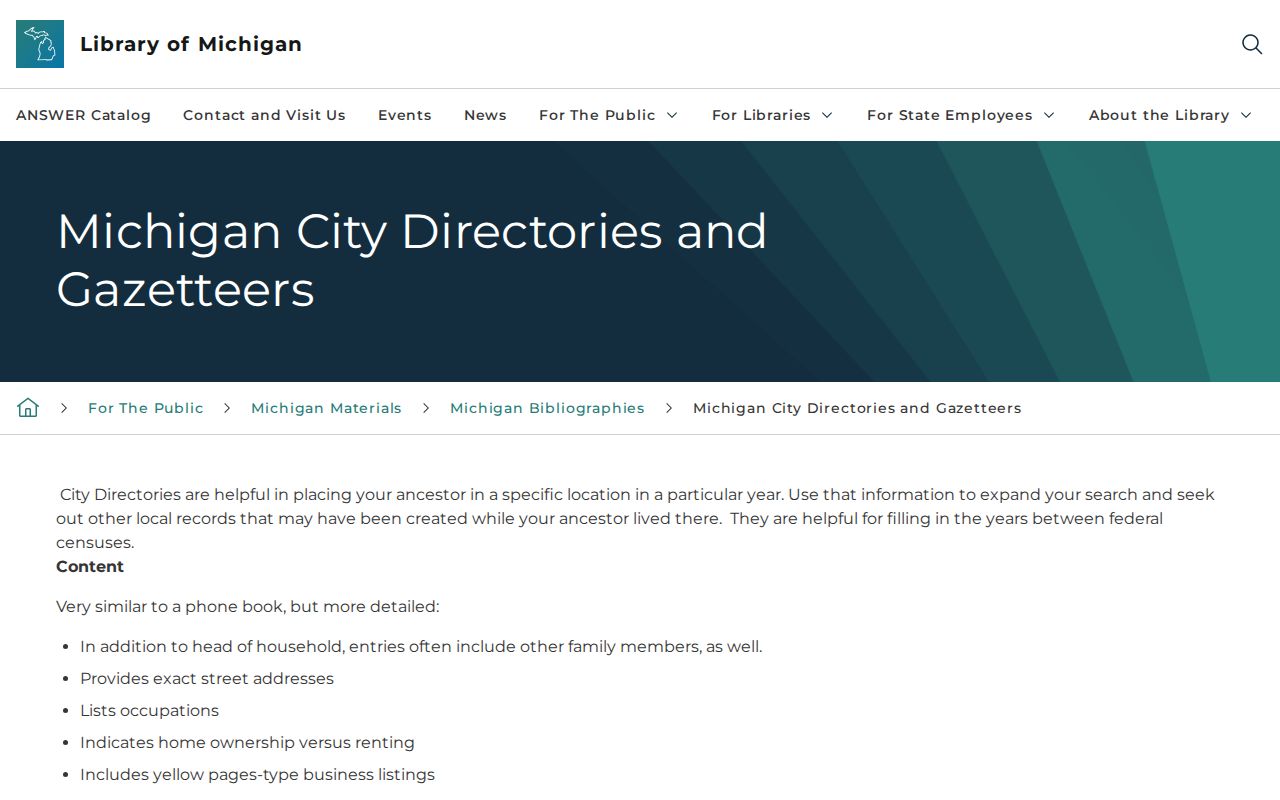
Choose the Oakland County format from the information already known, whether that is a surname, an old number, or a street address.
Note: A directory’s owner or renter mark is a contemporary publishing clue, not a replacement for a recorded deed.
Oakland County Directory Custody Changes
Older Oakland County records are spread across local history rooms, clerk files, archives, and libraries because the record center changed with the county. Pontiac became the seat after Oakland County formed in 1820. A 1905 sandstone courthouse was later replaced by the present county campus, whose cornerstone was laid in 1960. The old Lady Justice statue was stored after the 1962 demolition and returned in 1983. That Oakland County local story is a reminder to ask where a book, reel, or transferred series is held rather than treating a web search as the entire record.
Michigan Archives says government records are retained or disposed of under approved schedules, and Oakland County local material can move to the state repository. A historical gap is often a question of custody or format. Ask the library, OCHS, Oakland County Genealogical Society, the Archives, or the relevant community clerk for the exact book, microfilm, reel, or transferred record series. The OCGS collection is housed in the OCHS carriage house by appointment.
- Write the person’s name, initials, street spelling, community, and the first confirmed directory year.
- Check adjacent listed years and both the surname and street arrangements where the volume supplies them.
- Pair each directory decade with the released federal census, remembering the National Archives 72-year release rule.
- Use the 1845 state census named in the Oakland guide as an earlier local anchor when the date fits.
- Close a move or disappearance with a newspaper, obituary, probate, tax, or recorded land source.
Tracing Families in Oakland County Directories
Use an Oakland County directory sequence to create a modest timeline, not a conclusion from one line. A new address can mean a move within Oakland County, a changed street name, a changed municipal label, or a different person with a similar name. Compare the address with a released census household, then bring in a deed or tax roll only when the question is ownership. The Oakland County resident lookup route is better for checking a modern public record after a historical name has been identified.
For pre-address research, Oakland County’s 1857 county map, 1896 illustrated atlas, 1908 atlas and patrons’ reference directory, and 1930 plat book provide land and community context. The University of Michigan has a digitized 1908 Standard Atlas of Oakland County with a plat book and directory material. An atlas landowner label still is not a deed, but it can preserve the legal-description or neighborhood bridge needed to find one.
If the name vanishes, do not assume a death or a permanent departure. The person may have been omitted, listed under initials, living outside the book’s Oakland County geography, or using a new address. A dated comparison across Oakland County historical volumes, census releases, newspapers, and probate records gives the more careful answer.